Water Safety
Understand your environment before entering the water
Each surf spot has unique characteristics that can impact safety, including currents, ocean floor conditions, and local marine life.
Before surfing a new location, it is important to understand:
• wave size and consistency
• tides and tide changes
• currents and rip tides
• wind conditions
• entry and exit points
Forecasting tools such as Surfline, tide charts, surf cams, and local reports can help surfers better understand conditions before paddling out.
Local Knowledge
When traveling, taking a few minutes to observe the lineup or ask respectful questions can significantly improve safety. Local surfers often understand hazards that may not be obvious online, including:
• hidden rocks or reef
• difficult paddle-outs
• strong currents
• marine life concerns
• dangerous tide changes
Before entering unfamiliar water:
• watch several wave sets
• identify currents
• locate safe exits
• observe where experienced surfers paddle out and exit
Many injuries occur because surfers enter the water too quickly without fully understanding the conditions.
A spot that appears manageable at one tide may become significantly more dangerous at another.
Related Articles:
Spot-Specific Hazards
Every surf spot is different. Important factors include:
• reef vs sand bottom
• rocks or cliffs
• shallow sections
• tide-dependent hazards
• local marine life
From a Surfer + Medical Perspective
From a medical perspective, many surf injuries occur because environmental hazards are underestimated. From a surfer’s perspective, unfamiliar surf spots can change quickly depending on tide, swell, and conditions.
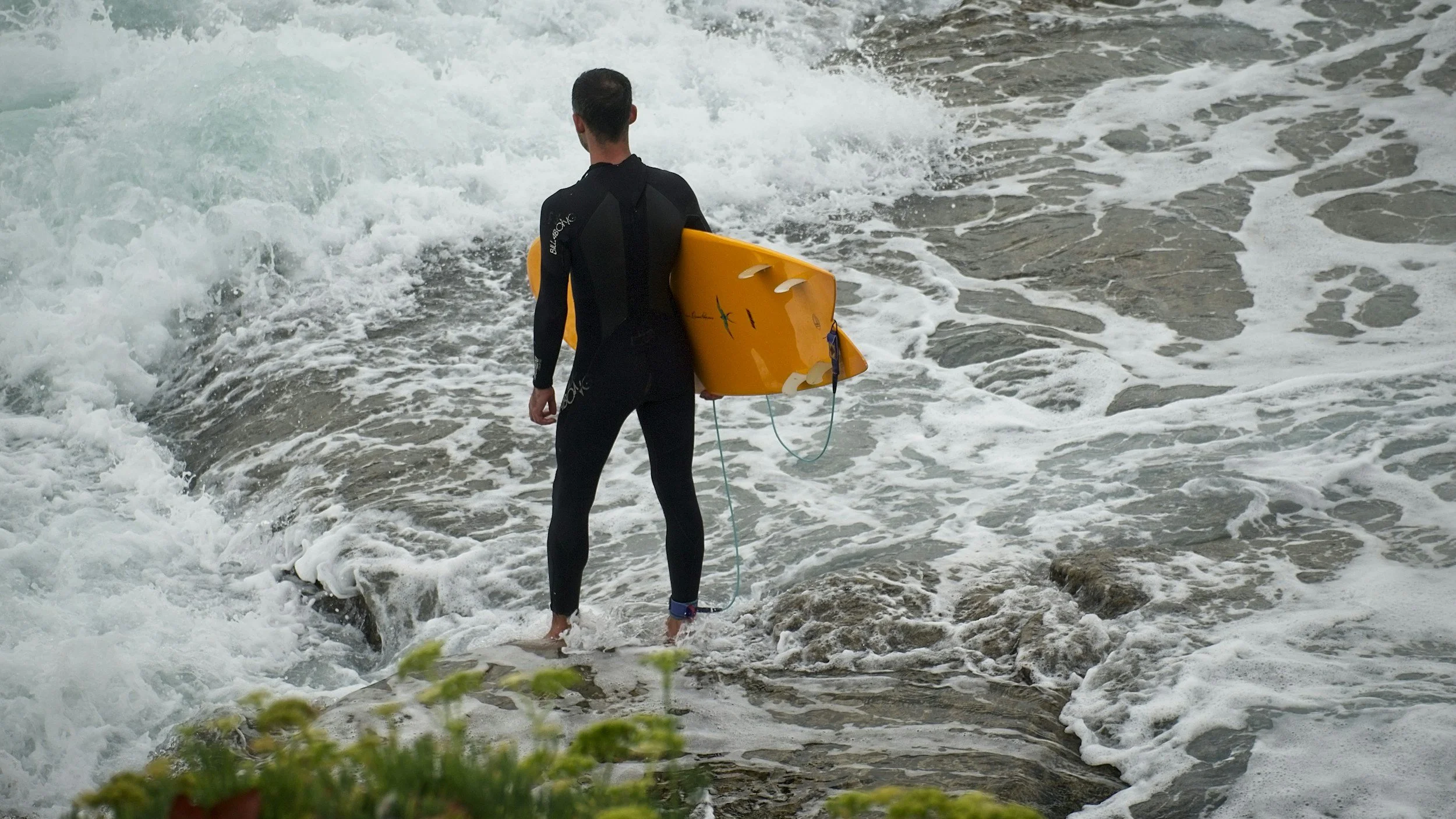
I’ve personally experienced this while surfing Anchor Point in Taghazout during high tide, where exiting became unexpectedly difficult due to strong whitewash and exposed rocks. Timing waves and navigating the rocks safely became just as important as the surfing itself.
Understanding how a spot behaves before paddling out can make a major difference in both safety and overall experience.