

Surfing Bruises and Impact Injuries
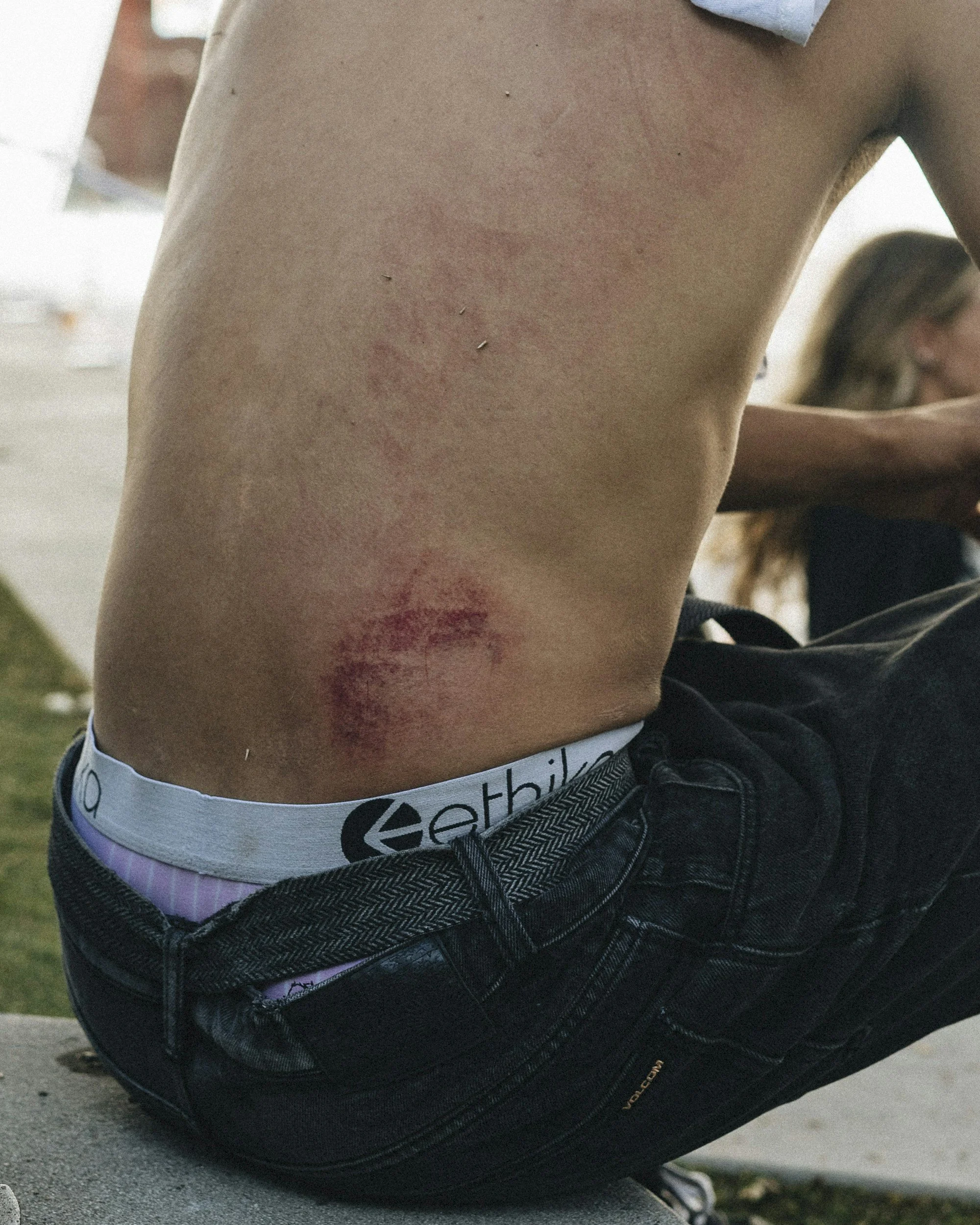
What Are Surfing Contusions?
Contusions (bruises) occur when blunt force trauma damages small blood vessels beneath the skin. In surfing, bruises most commonly occur after impact with your surfboard, reef, ocean floor, or another surfer.
While bruises are usually minor, significant impacts can occasionally hide more serious injuries such as fractures, muscle tears, or joint injuries.
Studies suggest bruises account for approximately 11–13% of all surfing injuries.
Common Causes of Surfing Bruises
The most common causes include:
Impact with your own surfboard
Board nose or rail strikes
Falling onto shallow reef or sand
Collisions with other surfers
Wave-driven impacts
Commonly affected areas include:
Head and face
Shoulders
Thighs
Hips
Lower legs
Symptoms
Most bruises cause:
Tenderness
Swelling
Skin discoloration
Localized pain
Mild stiffness
Seek medical evaluation if you develop:
Severe swelling
Inability to bear weight
Significant loss of motion
Numbness or tingling
Persistent pain lasting more than several days
These symptoms may indicate a fracture or more significant injury.
Treatment
First 24–48 Hours
Initial management focuses on reducing pain and limiting swelling.
PRICE Protocol
Protect the injured area
Rest from surfing and strenuous activity
Ice for 20 minutes at a time
Compression if comfortable
Elevate when possible
Ice is most helpful during the first several hours after injury.
Returning to Activity
Gentle movement and light activity are often beneficial once serious injury has been excluded.
Most uncomplicated bruises improve within:
Several days for minor injuries
1–3 weeks for larger contusions
Avoid returning to surfing if pain significantly alters your stance, paddling, or pop-up mechanics.
Arnica for Bruising
Many surfers use topical Arnica Montana cream or gel to reduce bruising.
Research suggests topical arnica may modestly accelerate bruise resolution and reduce discoloration, although results have been mixed across studies.
If using arnica:
✓ Apply only to intact skin
✓ Follow package directions
✓ Stop use if irritation develops
Avoid applying arnica to:
Open cuts
Reef wounds
Broken skin
Oral arnica products have not consistently demonstrated benefit and are generally not recommended.
When to Seek Medical Care
Consider medical evaluation if:
Pain is severe
Swelling continues to worsen
You cannot bear weight
The injury involves the ribs, head, or spine
Symptoms persist beyond 1–2 weeks
You suspect a fracture
From a Surfer + Medical Perspective
Bruises are part of surfing.
Most of us have taken a board to the thigh, shoulder, ribs, or face at some point. The majority heal with time and simple care. What matters is recognizing when a “bruise” may actually be something more significant.
As both a surfer and nurse practitioner, I pay particular attention to bruises involving the ribs, hips, and hands. These areas commonly hide fractures that surfers initially dismiss as minor impacts.
When in doubt, get checked. Missing a few sessions is better than turning a manageable injury into a prolonged recovery.
Key Takeaway
Surfing bruises are common and usually heal without complications. Early ice, relative rest, and gradual return to activity are often all that is needed. Topical arnica may help some surfers, but significant pain, swelling, or functional limitations should prompt evaluation for a more serious injury.
Explore related guides and essentials below:
References
Furness J, et al. American Journal of Sports Medicine. 2015.
Quinn J, et al. Injury. 2022.
Bickley RJ, et al. JBJS Reviews. 2021.
Hewett Brumberg EK, et al. Circulation. 2024 First Aid Guidelines.
Leu S, et al. British Journal of Dermatology. 2010.