

Head Injuries in Surfing
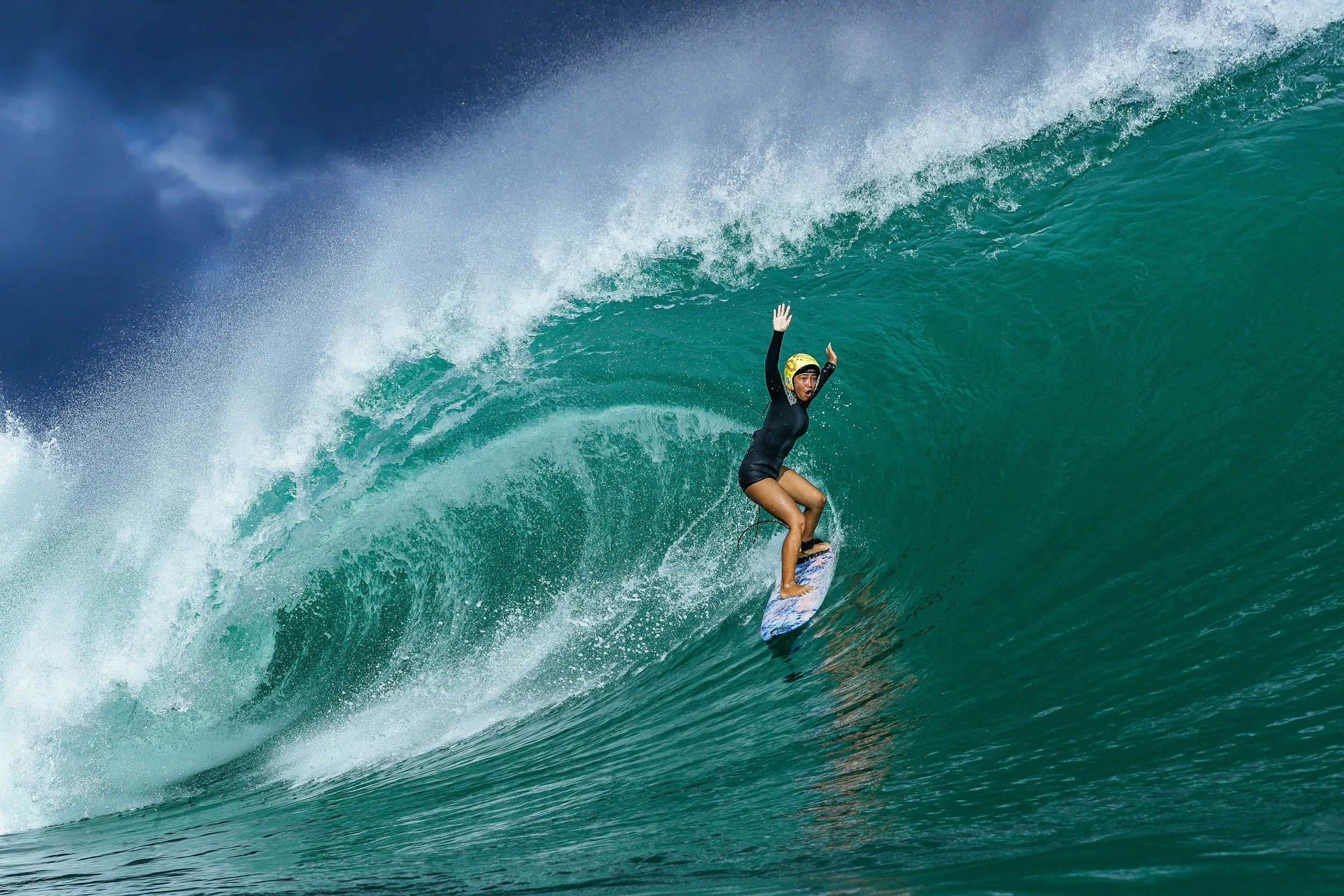
Understanding concussion, traumatic head injury, and helmet considerations in surfers
Head, neck, and facial injuries are among the most common acute injuries in surfing.[1][2]
Most surfing-related head injuries involve lacerations, concussions, or facial trauma, though more severe injuries — including skull fractures, intracranial bleeding, and cervical spine injuries — can occur in heavy surf conditions.[1]
Direct contact with the surfer’s own board remains the most common mechanism of injury, followed by impact with the ocean surface, reef, rocks, or the seafloor.[1][3]
Common Head Injuries in Surfers
Concussion
Concussions may occur after:
wipeouts
board impact
collisions with other surfers
reef or seafloor impact
heavy wave hold-downs
Symptoms may include:
headache
dizziness
nausea
confusion
light sensitivity
balance problems
memory issues
fatigue
Research suggests surfing-related concussions are likely underdiagnosed and underreported.[4]
Lacerations and Facial Trauma
Surfboard fins, noses, and rails commonly cause:
scalp lacerations
facial cuts
orbital injuries
dental trauma
These injuries are especially common in crowded conditions or larger surf.
Cervical Spine Injuries
Neck and spinal injuries may occur from:
shallow water impacts
reef or sandbar collisions
awkward wipeouts
wave-driven compression injuries
Serious spinal injuries are rare but potentially devastating.[5]
Helmet Considerations in Surfing
Helmet use in surfing remains somewhat controversial, and high-quality evidence specifically evaluating surf helmet effectiveness is still limited.[1]
However, helmets may help reduce:
scalp lacerations
superficial head trauma
direct impact injuries
Helmet use may be worth considering in:
heavy reef breaks
shallow waves
wave pools
larger surf
tow surfing
foil surfing
surfers with prior concussion history
While helmets may not fully prevent concussion, they may reduce certain impact-related injuries and potentially lessen severity in some situations.
Prevention Strategies
Helpful strategies include:
knowing your limits
avoiding overcrowded conditions
respecting heavy surf
using proper leash and board control
avoiding surfing under the influence
gradual progression into larger waves
considering helmets in higher-risk environments
Recovery after concussion is also important. Returning too early after head injury may increase risk for prolonged symptoms or repeat injury.
When to Seek Medical Care
Urgent medical evaluation is important for:
loss of consciousness
repeated vomiting
worsening headache
confusion
seizures
neck pain
weakness or numbness
balance problems
persistent symptoms after head trauma
Severe trauma involving reef, shallow water, or large surf should never be ignored.
From a Surfer + Medical Perspective
As both a surfer and medical professional, head injuries are something I think many surfers underestimate — especially in bigger surf or heavy conditions.
Surf culture often normalizes wipeouts, hold-downs, and board impacts, but concussions and traumatic injuries are very real risks in the ocean.
One thing that stands out medically is how underrecognized concussion symptoms may be among surfers. Many surfers experience headaches, dizziness, or cognitive fog after significant wipeouts without realizing they may have sustained a concussion.
From a surfer’s perspective, helmets can feel unfamiliar or unpopular in certain lineups. But in heavy reef breaks, wave pools, larger surf, foil surfing, or high-impact environments, helmet use deserves serious consideration.
The goal is not fear — it is longevity, risk reduction, and protecting the ability to continue surfing safely long-term.
Related Article:
References
Ratz C, Dhillon P, Saway BF, et al. Evaluating Head and Neck Trauma in Surfing: Injuries and Prevention in an Olympic Sport. Acta Neurochir. 2026;168(1):84.
Muhonen EG, Kafle S, Torabi SJ, et al. Surfing-Related Craniofacial Injuries: A NEISS Database Study. J Craniofac Surg. 2022;33(8):2383-2387.
Bickley RJ, Belyea CM, Harpstrite JK, Min KS. Surfing Injuries: A Review for the Orthopaedic Surgeon. JBJS Rev. 2021;9(4).
Ward J, Haakonssen E, Parsonage J. Concussion Incidence and Mechanisms Among Elite Surfers. Clin J Sport Med. 2024;34(6):591-596.
Thom O, Roberts K, Leggat PA, et al. Cervical Spine Injuries Occurring at the Beach. BMC Public Health. 2022;22(1):1404.