

Sea Urchin Injuries and Surfing
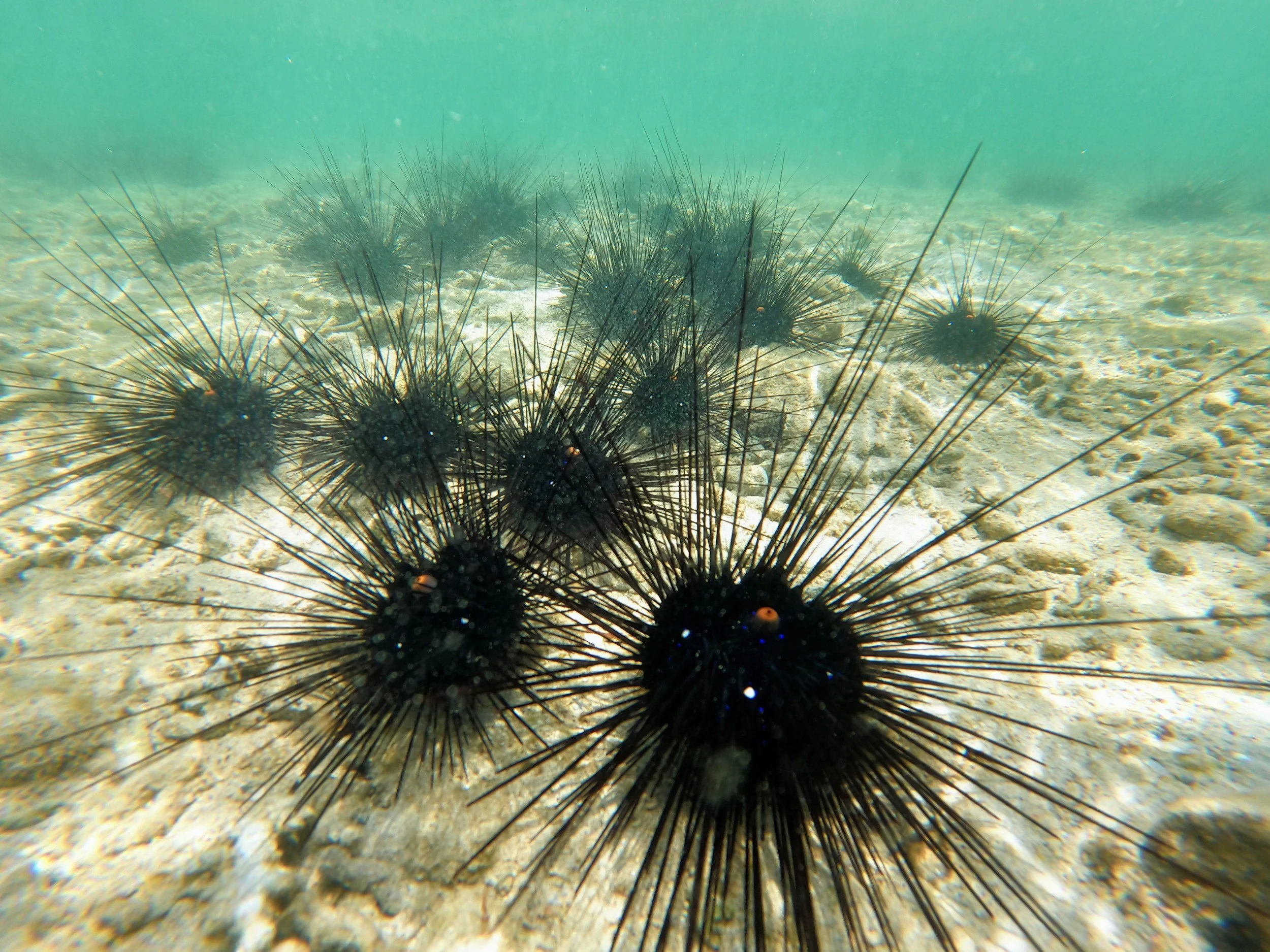
Sea urchin injuries are common among surfers, divers, and ocean swimmers, especially in reef breaks, tide pools, and shallow rocky areas.
Most injuries are not life-threatening, but they can be painful and may lead to infection, retained spine fragments, or delayed skin reactions if not treated properly.
How Sea Urchin Injuries Happen
Sea urchin injuries usually occur when a surfer:
steps on an urchin in shallow water
falls onto reef or rocks
brushes against urchins while paddling or duck diving
walks barefoot across rocky reef areas
tries to remove spines aggressively
The spines are brittle and can break under the skin. Some discoloration may come from pigment released by the spine, not necessarily a retained fragment.
Immediate First Aid
Initial care focuses on pain control, cleaning the wound, and avoiding unnecessary digging.
Helpful steps include:
soaking the area in hot, non-scalding water
rinsing the wound with clean water
removing only clearly visible spine fragments
avoiding aggressive digging into the skin
keeping the wound clean and covered
updating tetanus if needed
Hot water immersion can help reduce pain because some marine venoms are heat-sensitive.
When to Seek Medical Care
Medical evaluation is recommended if:
pain is severe or worsening
spines are near a joint, tendon, or nail
the wound becomes red, swollen, warm, or draining
you develop fever or spreading redness
symptoms persist for days to weeks
you cannot remove visible spine fragments safely
the injury involves the hand, foot, or joint area
X-rays may be needed in some cases to look for retained spine fragments.
From a Surfer + Medical Perspective
From a medical perspective, sea urchin injuries are puncture wounds that can involve venom, retained foreign material, and exposure to marine bacteria. Most are managed with hot water immersion, wound cleaning, pain control, and monitoring for infection.
From a surfer’s perspective, these injuries often happen in reef-heavy locations when you are trying to get in or out of the water quickly. The biggest mistake is digging aggressively at the skin, which can make irritation worse or push fragments deeper.
Simple prevention strategies include:
wearing reef booties in shallow reef areas
avoiding walking barefoot over rocky reef
shuffling carefully in shallow water
not touching or handling sea urchins
cleaning puncture wounds early
watching for delayed redness, swelling, or nodules
If a puncture wound does not heal, becomes increasingly painful, or forms a persistent bump weeks later, medical evaluation is important. Retained spine fragments or atypical marine infections can occasionally cause delayed problems.
Key Takeaway
Sea urchin injuries are usually manageable, but they should not be ignored. Hot water immersion, gentle wound care, avoiding aggressive spine removal, and monitoring for infection can help surfers recover safely and get back in the water.
Related Articles
References
Auerbach PS. Marine Envenomations. New England Journal of Medicine. 1991.
Noonburg GE. Management of Extremity Trauma and Related Infections Occurring in the Aquatic Environment. Journal of the American Academy of Orthopaedic Surgeons. 2005.
Brophy RH, Bernholt DL. Aquatic Orthopaedic Injuries. Journal of the American Academy of Orthopaedic Surgeons. 2019.
De la Torre C, Vega A, Carracedo A, Toribio J. Identification of Mycobacterium marinum in Sea-Urchin Granulomas. British Journal of Dermatology. 2001.
Canetti D, Riccardi N, Antonello RM, et al. Mycobacterium marinum: A Brief Update for Clinical Purposes. European Journal of Internal Medicine. 2022.