SURFING AFTER RAIN
Understanding water quality and infection risk
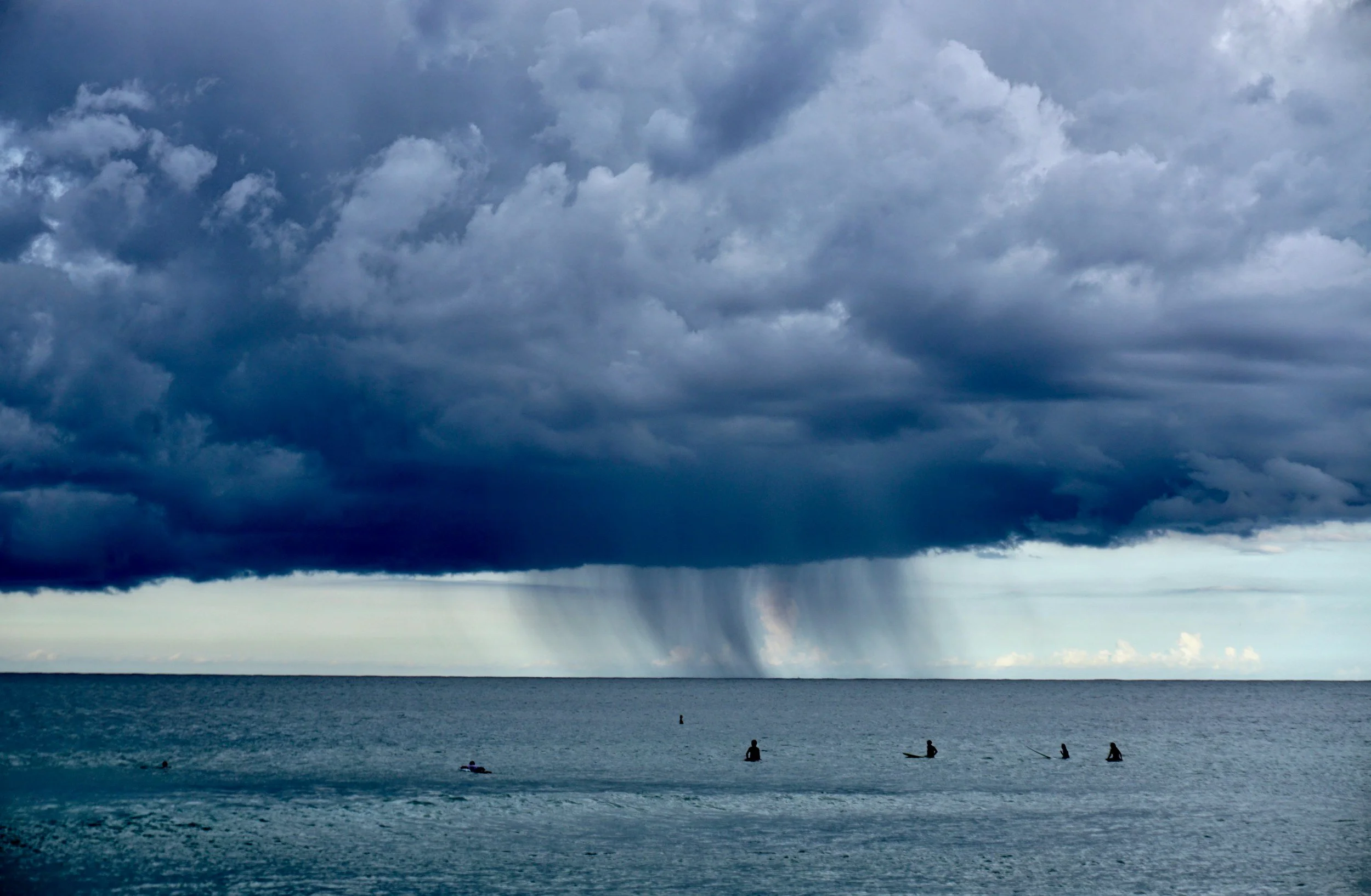
Rainfall increases runoff into the ocean, which can introduce bacteria, viruses, pollutants, and debris into coastal waters. This is especially common near urban runoff channels, rivers, and storm drains.
What changes after rain?
After rainfall, bacteria and viral contamination in ocean water can rise significantly due to:
stormwater runoff
sewage contamination
agricultural and urban waste
debris and sediment disturbance
Research has shown substantially higher levels of fecal indicator bacteria and human-associated pathogens in coastal waters following rain events, particularly near stormwater outflows.[1][4]
Why does this matter for surfers?
Surfers are often exposed longer than swimmers and may ingest more ocean water during paddling, duck diving, and wipeouts.
Post-rain surfing has been associated with increased risk of:
A prospective study of surfers in Southern California demonstrated significantly higher illness rates following wet-weather surf exposure compared to dry-weather conditions.[4]
The “72-Hour Rule”
Many coastal health agencies and surf communities recommend avoiding ocean exposure for approximately 72 hours after significant rainfall, particularly near:
storm drains
river mouths
urban runoff areas
The highest contamination risk is generally within the first 24–48 hours after rainfall, although certain pathogens may persist longer depending on environmental conditions.[7][8]
Who is at higher risk?
Risk may be higher in individuals with:
open wounds or cuts
weakened immune systems
chronic sinus or ear issues
recent illness
Risk reduction strategies
If you choose to surf after rainfall:
avoid areas near storm drains or runoff channels
avoid entering the water with open wounds
rinse thoroughly after surfing
avoid swallowing ocean water
monitor closely for symptoms afterward
Symptoms to watch for
Seek medical attention if you develop:
increasing redness or drainage from cuts
fever
severe diarrhea or vomiting
worsening ear pain
persistent sinus symptoms
From a Surfer + Medical Perspective
From a clinical perspective, post-rain ocean conditions are associated with measurably increased bacterial and viral contamination, particularly in urban coastal environments. From a surfer’s perspective, ideal swell often arrives with storms, and many surfers will still paddle out despite the risks.
Understanding how rainfall affects water quality — and knowing when to avoid certain locations or monitor for symptoms — allows surfers to make more informed decisions while still respecting the realities of surf culture.
Related Articles:
References
Steele JA, et al. Water Research. 2018.
Arnold BF, et al. American Journal of Epidemiology. 2017.
Soller JA, et al. Water Research. 2017.
Tseng LY, Jiang SC. Marine Pollution Bulletin. 2012.
Blanch AR, et al. Water Research. 2023.