Surfer’s Hair Guide
Protecting your hair from sun, saltwater, and environmental exposure
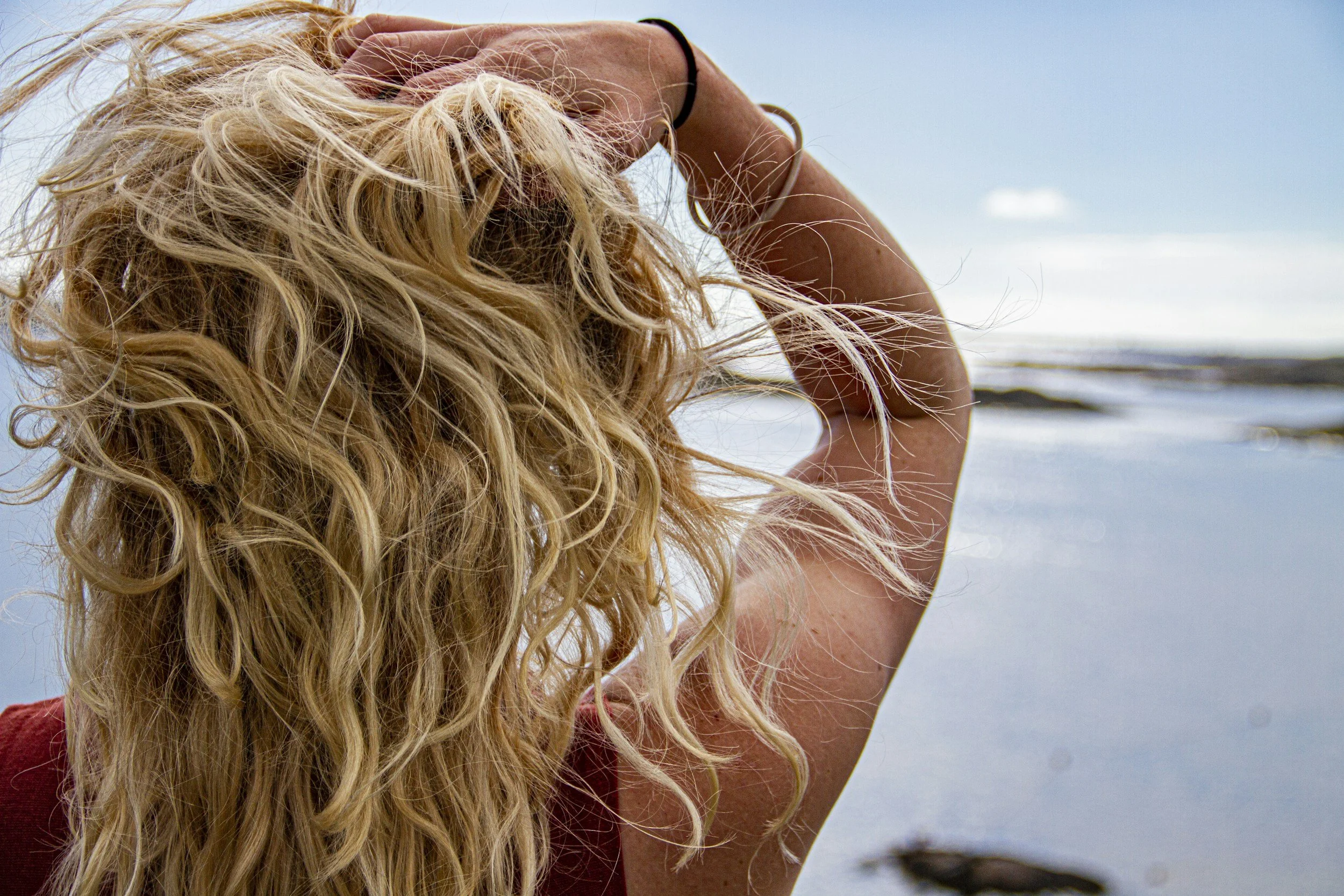
Surfing exposes hair to a unique combination of stressors, including saltwater, ultraviolet (UV) radiation, wind, and environmental contaminants. Over time, this can lead to dryness, breakage, color fading, and scalp irritation.
Consistent care before and after surf sessions is important to maintain hair strength, moisture balance, and overall scalp health.
UV Exposure & Color Protection
Ultraviolet (UV) radiation can damage the hair shaft, weaken protein structure, and accelerate color fading, especially in chemically treated or lightened hair.
Hair that is exposed repeatedly to sun and saltwater may become more brittle and prone to breakage over time.
Recommendations:
Wear a hat when not in the water when possible
Use UV-protectant hair products
Be especially cautious with color-treated or bleached hair
Saltwater & Dryness
Saltwater can draw moisture out of the hair shaft, leaving hair dry, tangled, and more susceptible to breakage. Repeated exposure without proper care can worsen these effects.
Before surfing:
Rinse hair with fresh water
Apply a light protective oil or leave-in conditioner
After surfing:
Rinse thoroughly with fresh water as soon as possible
Use a gentle, hydrating shampoo when needed
Follow with a moisturizing conditioner
Travel & Water Quality (e.g., Bali)
Traveling to surf destinations may expose hair to hard water, chlorine, or contaminants that can further dry and damage hair and scalp.
This can be especially noticeable in places with poor water quality.
Recommendations:
Use a gentle clarifying shampoo periodically
Deep condition at least once per week
Consider bringing your own hair care products when traveling
Conditioning & Recovery
Regular conditioning helps restore moisture, improve elasticity, and reduce breakage.
Recommendations:
Use conditioner after most surf sessions
Incorporate a deeper conditioning treatment at least once weekly
Avoid over-washing, which can strip natural oils
Heat & Styling
Heat styling (blow dryers, straighteners, curling tools) can further weaken hair that is already stressed from sun and salt exposure.
Recommendations:
Limit heat styling when possible
Use heat protectant products if styling
Allow hair to air dry when feasible
Nutrition & Hair Health
Hair health is influenced not only by external care but also by overall nutrition. Adequate intake of key nutrients supports hair growth, strength, and resilience.
Important nutrients include:
Protein (supports hair structure)
Iron (important for hair growth)
Vitamin D (linked to hair follicle health)
Biotin and B vitamins (support keratin production)
Omega-3 fatty acids (support scalp health)
While supplements may be helpful in certain cases, it is generally best to prioritize a balanced diet. Individuals with concerns about hair loss or nutritional deficiencies may benefit from discussing this with a healthcare professional.
Key Takeaways
Protect hair before surfing with moisture and barrier products
Rinse and condition after each session
Limit UV and heat exposure
Support hair health with proper nutrition
Be especially mindful when traveling to areas with poor water quality
Note
This information is for educational purposes only and is not a substitute for professional medical advice.